Monday - Saturday

9:00 AM to 6:00 PM

Want to talk with us?

09177003390

Send us an email

myfrzn.aziz@gmail.com

The AZIZ Approach

The AZIZ Approach

Regenerative Development
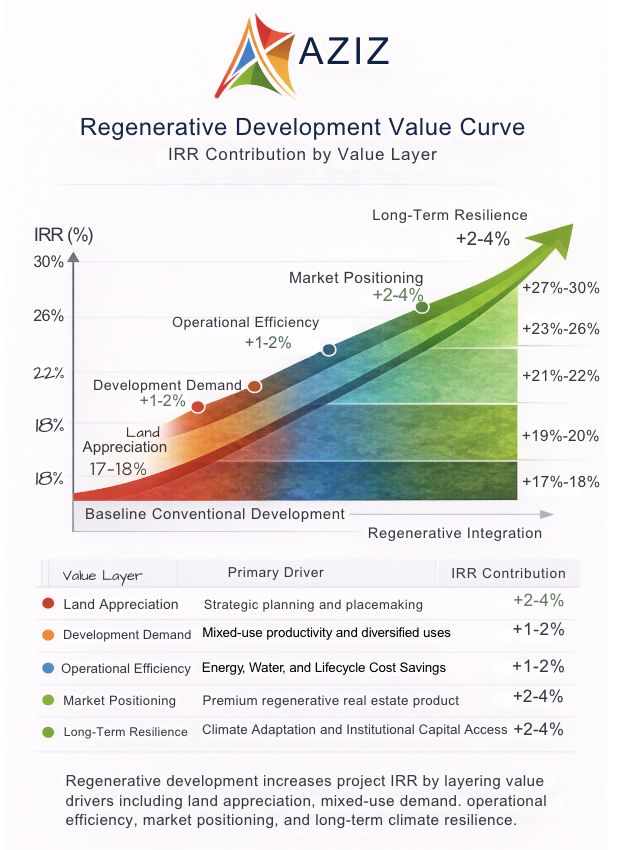
IRR by Value Layer

Regenerative development does not rely on a single source of profit. Instead, it generates stacked value streams across the lifecycle of the project — from land strategy to long-term asset performance.

Through thoughtful planning, efficient resource use and integrated development strategies, projects generate value through land appreciation, development demand, operational efficiency, market positioning and long-term resilience.

By stacking these value streams, regenerative developments achieve stronger financial viability, improved investment performance, and greater long-term confidence for landowners and investor-developers.

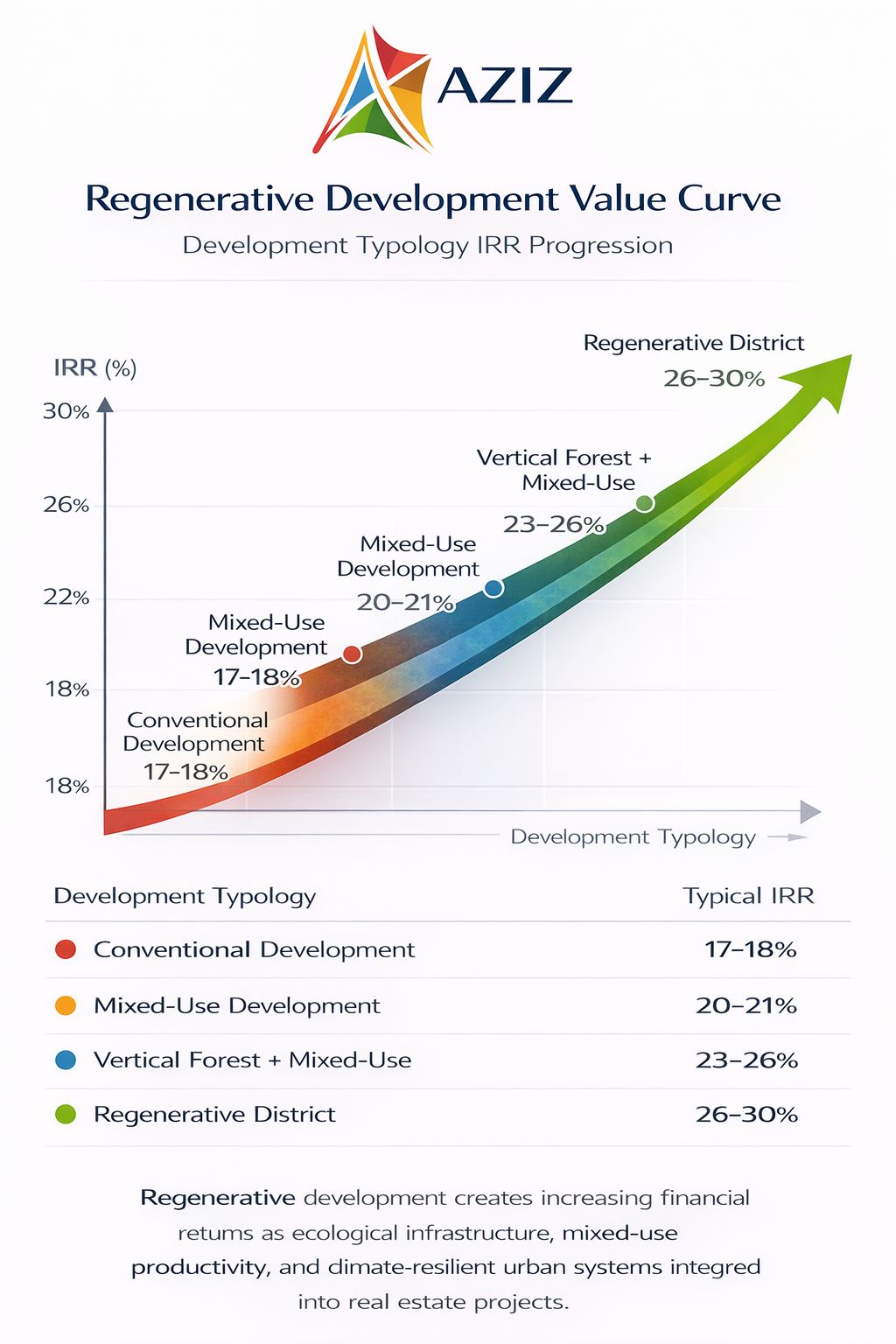
Regenerative development creates increasing financial returns as ecological infrastructure, mixed-use productivity, and climate-resilient urban systems are integrated into real estate projects.

Development Typology IRR Progression

  • Land Value Uplift
  • Development Value Creation
  • Market & Brand Premium
  • Long-Term Asset Resilience
  • Capital Access Advantage

Regenerative development creates layered project value by integrating strategic land planning, sustainable design, efficient resource systems, and mixed-use programming. These elements enhance land value, strengthen market demand, improve lifecycle performance, and attract sustainable investment capital, generating resilient long-term asset performance.

How Regenerative Development Creates Investment Value

How AZIZ Applies the Regenerative Value Stack in Projects Value

AZIZ helps landowners and investor-developers capture these layered benefits through structured regenerative development transactions—with Hybrid Joint Venture and other collaborative models—supported by clear Terms of Reference (TOR) and Authority-to-Negotiate (ATN) frameworks.

By aligning land strategy, project governance, and coordinated execution, AZIZ helps transform land opportunities into financially viable, well-governed, and sustainable development projects.

LivingWell Bajada

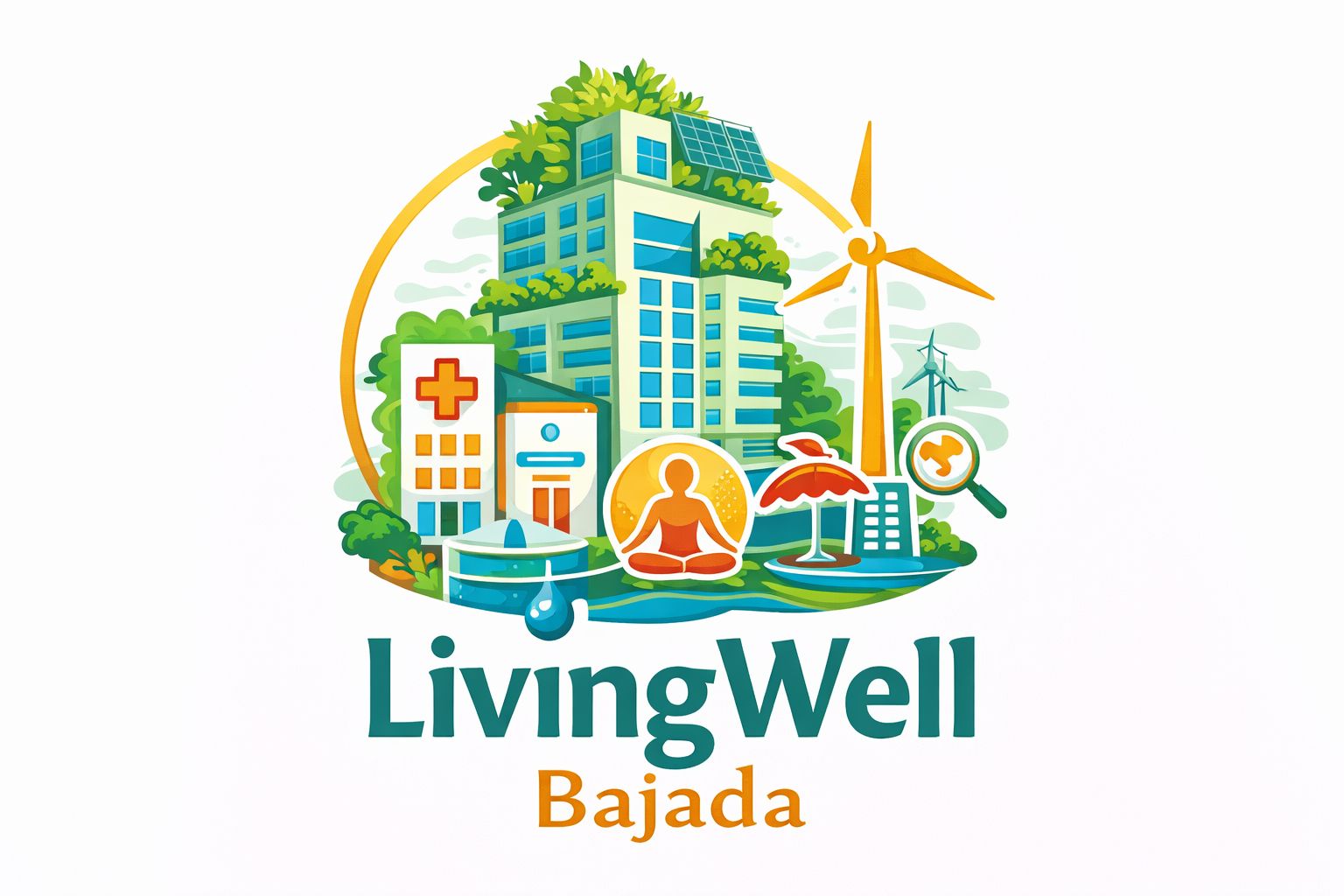
LivingWell Bajada (Health Oriented Mixed Use Development)

LivingWell Bajada demonstrates the Regenerative Value Stack by enhancing land value within a prime medical corridor through a health-oriented mixed-use development integrating residential development within preventive medicine clinics, wellness services, and health food concepts. Regenerative design features—including a vertical forest building envelope, rainwater harvesting systems, and renewable energy integration—reduce operating costs and environmental impact while strengthening the project's sustainability profile. These features improve lifecycle efficiency and enhance investment performance through higher IRR and shorter payback periods, positioning LivingWell as a resilient preventive health ecosystem that generates long-term asset value for investors and the community.

Vivere Lanang (4PH)

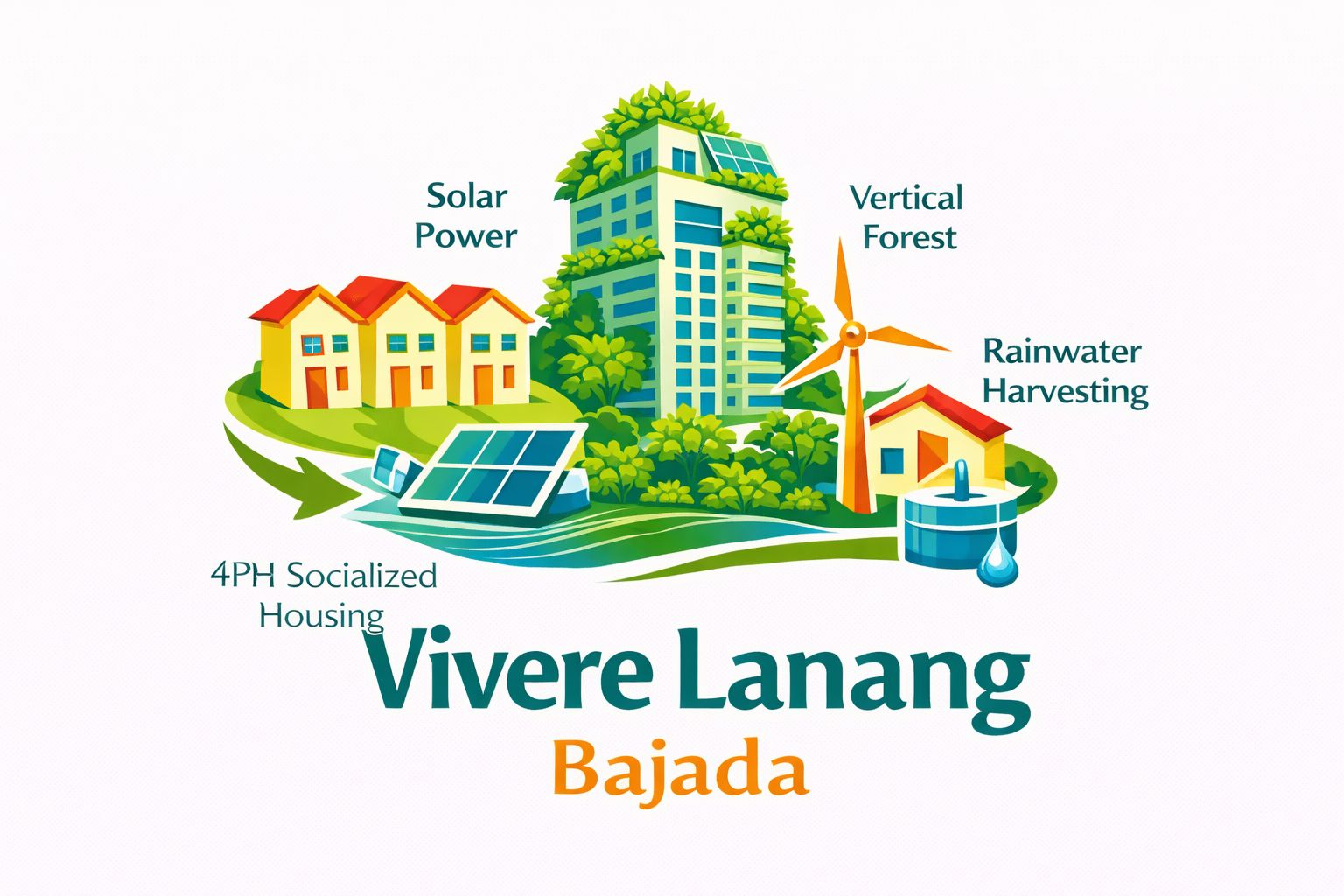
Vivere Lanang demonstrates how regenerative development can successfully support the integration of socialized 4PH residential housing within an urban mixed-use environment. Through strategic planning, the project enhances land value while accommodating inclusive housing alongside neighborhood services and community-oriented spaces. Regenerative design principles—such as efficient land use, shared amenities, climate-responsive design, and sustainable resource systems—improve operational efficiency and long-term investment performance.

Vivere Lanang
Iranun Corridor

Iranun Corridor (Circular Economic Cluster System)

The Iranun Corridor illustrates the Regenerative Value Stack by transforming heritage, ecology, and local enterprise into layered development value while supporting municipal collaboration within a Circular Economic Cluster System (REZ). The corridor connects five Iranun municipalities— Parang, Datu Blah Sinsuat, Sultan Mastura, Sultan Kudarat, and Matanog—and encourages coordinated regional development through tourism, agriculture, cultural preservation, and community enterprises. By strengthening local value chains, improving resource efficiency, and supporting resilient place-based development, the corridor creates durable economic opportunities, cultural revitalization, and long-term asset value for participating municipalities, communities, and development partners.